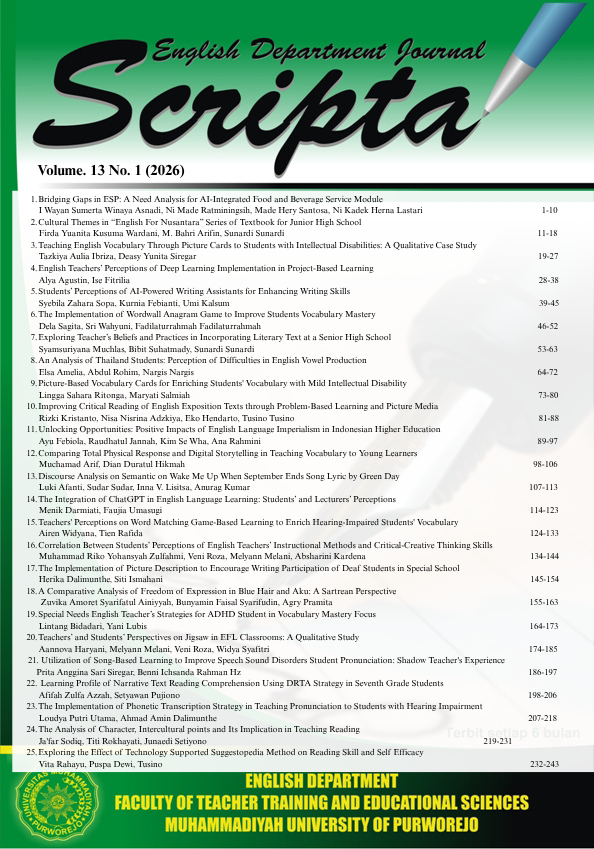
The Analysis of Character, Intercultural Points, and Its Implication in Teaching Reading
Abstract
This study explores the characterization of the principal characters in The Huntsman: Winter’s War and examines its pedagogical implications for teaching reading. Adopting a descriptive qualitative approach, the research analyzes the characters’ verbal expressions, nonverbal communication, and actions to identify their dominant traits. The findings reveal that Eric is characterized by courage, physical strength, and a strong sense of honor, whereas Freya exhibits selfishness, manipulation, and cruelty. The intercultural points found are Leadership Style, Love vs. Cultural Rules, Trust and Betrayal, Power Distance, and Communication Style. The study concludes that the movie offers valuable opportunities for reading instruction by providing an engaging narrative that promotes students’ comprehension and motivation. Reading-based activities, including summarizing and discussing the film’s plot, can be incorporated into classroom practice to enrich students’ reading experiences. The analysis of The Huntsman: Winter's War demonstrates that the film contains numerous intercultural elements that can be used to promote intercultural awareness in English language learning. Although the story is set in a fantasy world, the interactions among the characters reflect universal cultural values and communication practices that are relevant to intercultural communication. These include leadership styles, loyalty, trust, love, power relations, gender roles, conflict resolution, and moral decision-making.
Downloads
Copyright (c) 2026 Scripta : English Department Journal

This work is licensed under a Creative Commons Attribution-ShareAlike 4.0 International License.